How to Teach Mandarin Tones: A 4-Week Plan With Hand Signals, Games and Songs
8 min read by Tim

Most classes meet the four tones in week one. There's a chart, a wobbly hand, a round of mā má mǎ mà, and then the textbook moves on to greetings and numbers. Tones get corrected after that, but they never get taught again. By November, half the room says every word in a hopeful Tone 1.
Tones aren't a lesson. They're a habit, and habits need a few weeks of short, daily practice. Below is a four-week plan for teaching Mandarin tones in about ten minutes a lesson. It works alongside whatever unit you're already teaching. Each week has one focus, one game and one song move.
How do you teach Mandarin tones so they stick?
- Listen before speaking, every round. Students point, show a gesture or hold up fingers before anyone has to say a word. If they can't hear it, they can't say it.
- One set of hand signals for the whole term. Not a new routine every Monday.
- Get to two-syllable words quickly. Real Mandarin is mostly two-syllable words, and research on tone training (for example this study comparing one- and two-syllable practice) suggests practice with two-syllable words helps learners hear tones in those words better than single-syllable drills alone.
- Put meaning at stake. When the wrong tone changes the word, students start listening.
- Ten minutes, often. Four short blocks a week beat one long drill on Friday.
Week 1: Hear it, show it
Goal: every student can show the four tones with their hands, and pick the right one when they hear a single syllable.
Hand signals (keep these all term):
- Tone 1: flat hand, high and steady
- Tone 2: hand rises, like asking "what?"
- Tone 3: hand drops low and stays in the basement
- Tone 4: a sharp chop down
Daily ten minutes:
- 2 minutes, listen and point. Say one syllable. Students show the signal. Nobody speaks yet.
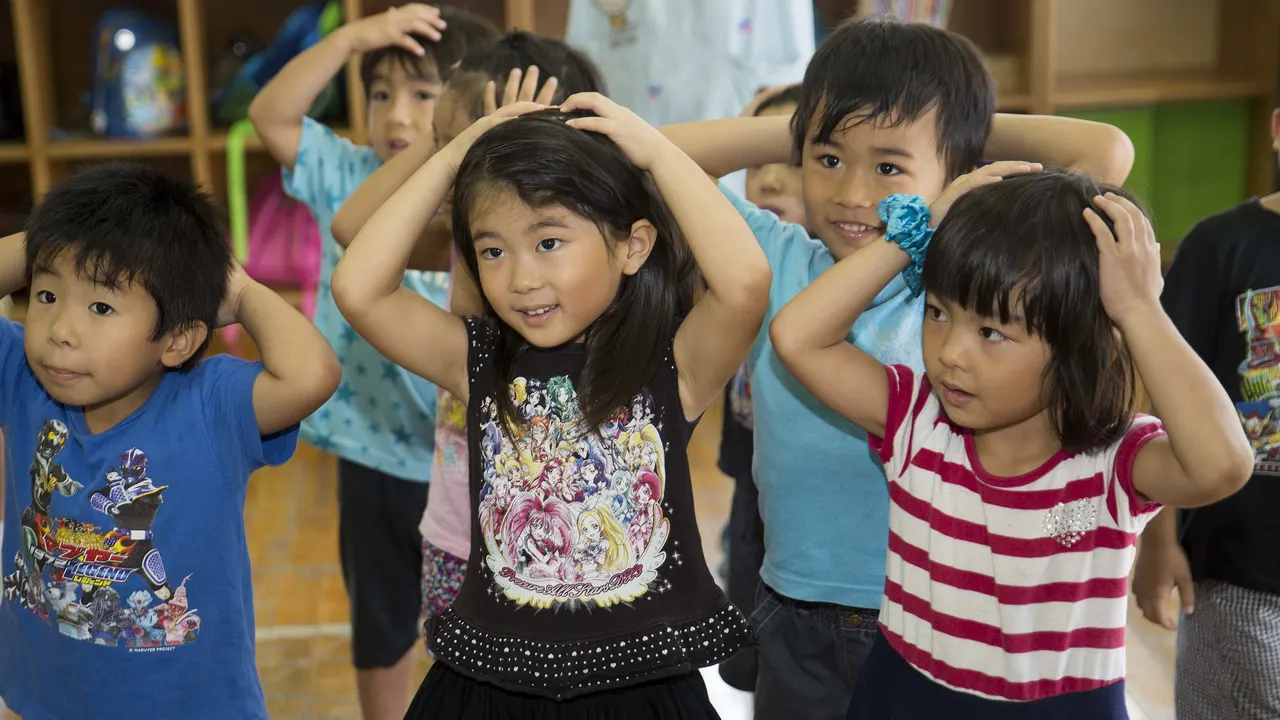
- 3 minutes, Tone Freeze. The whole-body version from 12 No-Prep Mandarin Classroom Games: arms flat, arms rising, crouch low, chop down. Wrong shape sits out one round, then comes straight back.
- 3 minutes, the Tones song. Play the Tones song from the Song Finder and have students do the signal for each tone as it's sung.
- 2 minutes, choral repeat. Now they say it, with hands.
Week 2: Minimal pairs and the Tone 3 basement
Goal: students hear that a tone changes the word, and stop mixing up Tone 2 and Tone 3.
Teach Tone 3 as "the low one." The full dip-and-rise is correct when a word is said alone, but in normal speech Tone 3 mostly stays low. Next to a rising Tone 2, the dip just confuses students. More on this in Tone Practice That Doesn't Kill the Room.
Daily ten minutes:
- 3 minutes, point to the meaning. Put two or four words on the board that differ only by tone: 妈 麻 马 骂 (mā má mǎ mà), 买 / 卖 (mǎi / mài), 汤 / 糖 (tāng / táng). Say one. Students point or hold up card A or B.
- 3 minutes, swap roles. A student says a word and you point. Get one wrong on purpose. When they correct you, they've heard it.
- 2 minutes, 2 or 3? Read only Tone 2 and Tone 3 syllables. Rising hand or basement hand.
- 2 minutes, Tone Ticket. Five words from today. Students hold one to four fingers against their chest where only you can see. You find out who's guessing in thirty seconds.
Week 3: Tone pairs in two-syllable words
Goal: students hear and say both tones in common two-syllable words, including the most common tone change.
There are 16 combinations of the four main tones in a two-syllable word. Use words students already know, or will meet soon:
| First tone | + Tone 1 | + Tone 2 | + Tone 3 | + Tone 4 |
|---|---|---|---|---|
| Tone 1 | 飞机 fēijī | 中国 Zhōngguó | 喝水 hē shuǐ | 音乐 yīnyuè |
| Tone 2 | 熊猫 xióngmāo | 学习 xuéxí | 牛奶 niúnǎi | 学校 xuéxiào |
| Tone 3 | 老师 lǎoshī | 法国 Fǎguó | 你好 nǐ hǎo | 米饭 mǐfàn |
| Tone 4 | 面包 miànbāo | 大学 dàxué | 汉语 Hànyǔ | 再见 zàijiàn |
Teach the main tone change here too. When two Tone 3 syllables meet, the first one is said as Tone 2: 你好 is written nǐ hǎo but said ní hǎo. Your students already say it that way. Now they know why.
Daily ten minutes:
- 3 minutes, two-arm Tone Freeze. Say a word from the grid. Students show the first tone with the left arm and the second with the right.
- 4 minutes, tone pair bingo. Students draw a 3×3 grid and write any nine tone pairs (1-4, 3-1, 2-2…). You say words. They cross off the tone pair, not the word. That way the word doesn't matter. Only the tones do.
- 3 minutes, partner check. One partner says a word from the grid, the other shows both tones with their hands.
Week 4: Tones in sentences and songs
Goal: tones hold up in phrases, not just in single words, and you check who has them.
Also teach the two tone changes students hear all the time: 不 (bù) becomes bú before a Tone 4 (不是 búshì, 不要 búyào), and 一 (yī) becomes yí before a Tone 4 (一个 yí ge) and yì before Tones 1, 2 and 3 (一天 yì tiān).
Daily ten minutes:
- 3 minutes, sing, speak, sing. Take one line from a song the class knows. Hum the shape of the line, speak the words to that shape, sing it, then speak it again. The Mouth Radical Song (吃一口, 我开口, 很可口) works well because the phrases are short.
- 4 minutes, 萝卜蹲 with tones. Groups are named 妈, 麻, 马 and 骂. Students have to hear the tone to know whether it's their turn to squat.
- 3 minutes, sentence signals. Say a short sentence from your current unit (我喜欢喝牛奶). Students signal each tone. Go slow, then at normal speed.
Friday check: say ten words. Students write 1, 2, 3 or 4 for each syllable. Then each student says five words to you or into a recording app. That gives you a simple listening and speaking check, and shows you which tone pairs to repeat next month.
What does a ten-minute tone block look like?
The same shape every week: listen and show (2 to 3 minutes), a game (3 to 4 minutes), a song or speaking move (3 minutes). Run it at the start of class, or use it as a bell ringer. After four weeks, drop to two blocks a week and keep the hand signals for corrections. A quick Tone 2 signal fixes a mistake mid-sentence without stopping the student.
Where do songs fit in?
Songs give students lots of practice without it feeling like a drill. Pick one song for the week and give students a tone job while it plays: signal the tone of one key word, or freeze on the chorus. You can find songs for every topic in Chinese Songs for Kids by Topic, and ways to level one song for mixed classes in One Song, Three Levels.
If you'd like the song videos in one place, that's Song Club (videos only, no printables). If you'd like ready-made song worksheets as well, that's Club Lǎoshī, which includes the videos too.
Four weeks. Ten minutes a lesson. Hands up before mouths open.
More classroom song videos and printables live at chinesebuddy.com.
Tim is the original founder, creator and dreamer of all things on Chinese Buddy. He can be contacted here.
Cover photo: Les Anderson, CC0, via Wikimedia Commons / Unsplash (cropped).
怎样教普通话声调:配手势、游戏和歌曲的四周计划
大多数班级在第一周认识四个声调:一张图表,一只晃来晃去的手,一轮 mā má mǎ mà,然后课本就进入问候和数字了。之后声调只会被纠正,不会再被教。到了十一月,半个班说每个字都带着一个充满希望的第一声。
声调不是一节课,而是一个习惯。习惯需要几周短小的每日练习。下面是一个四周计划,每节课大约十分钟,和你正在教的单元同时进行。每周一个重点、一个游戏、一个歌曲动作。
怎样教普通话声调才能记得住?
- 每一轮都先听后说。先让学生指、做手势或举手指,再让他们开口。听不出来,就说不出来。
- 整个学期用同一套手势。不要每周一换一套。
- 尽快进入双音节词。真实的普通话大多是双音节词。声调训练的研究(例如这项比较单音节和双音节练习的研究)显示,用双音节词练习,比只练单音节更能帮助学习者听出双音节词里的声调。
- 让意思受影响。声调错了,词就变了,学生才会认真听。
- 每次十分钟,经常练。一周四次短练习,胜过星期五一次长操练。
第一周:听出来,做出来
目标:每个学生都能用手势表示四个声调,听到单个音节时能选出正确的声调。
手势(整个学期都用这一套):
- 第一声:手掌平举,高而稳
- 第二声:手往上扬,像在问“什么?”
- 第三声:手落到低处,待在“地下室”
- 第四声:利落地往下劈
每天十分钟:
- 2分钟,听和指。你说一个音节,学生做手势。先不开口。
- 3分钟,声调定格。就是《12个零准备中文课堂游戏》里的全身版:手臂平举、手臂上扬、蹲低、往下劈。做错的坐下一轮,然后马上回来。
- 3分钟,声调歌。播放 Song Finder 里的声调歌(Tones),唱到每个声调时学生做相应的手势。
- 2分钟,齐读。现在开口说,手也一起动。
第二周:最小对立词和“地下室”第三声
目标:学生听出声调会改变词义,不再混淆第二声和第三声。
把第三声教成“低的那个”。完整的先降后升在单念时是对的,但在平常说话里,第三声大多保持低平。放在上升的第二声旁边,那个拐弯只会让学生更乱。更多做法见《不让课堂冷场的声调练习》。
每天十分钟:
- 3分钟,指出意思。在黑板上写两个或四个只差声调的字:妈 麻 马 骂(mā má mǎ mà),买 / 卖(mǎi / mài),汤 / 糖(tāng / táng)。你说一个,学生指出来,或举起 A 卡或 B 卡。
- 3分钟,换角色。学生说一个词,你来指。故意指错一次。学生纠正你,就说明他们听出来了。
- 2分钟,二还是三?只念第二声和第三声的音节。上扬的手,还是地下室的手。
- 2分钟,声调出门票。说五个今天学的词。学生把一到四根手指贴在胸前,只让你看到。三十秒就知道谁在猜。
第三周:双音节词里的声调组合
目标:学生能听出并说出常用双音节词的两个声调,包括最常见的变调。
四个声调在双音节词里有16种组合。用学生已经认识或很快会学到的词:
| 第一个字 | + 第一声 | + 第二声 | + 第三声 | + 第四声 |
|---|---|---|---|---|
| 第一声 | 飞机 fēijī | 中国 Zhōngguó | 喝水 hē shuǐ | 音乐 yīnyuè |
| 第二声 | 熊猫 xióngmāo | 学习 xuéxí | 牛奶 niúnǎi | 学校 xuéxiào |
| 第三声 | 老师 lǎoshī | 法国 Fǎguó | 你好 nǐ hǎo | 米饭 mǐfàn |
| 第四声 | 面包 miànbāo | 大学 dàxué | 汉语 Hànyǔ | 再见 zàijiàn |
这周也教最主要的变调:两个第三声相连时,第一个念成第二声。你好写作 nǐ hǎo,读作 ní hǎo。学生本来就这样说,现在他们知道为什么了。
每天十分钟:
- 3分钟,双臂声调定格。说表里的一个词。学生用左臂表示第一个声调,右臂表示第二个。
- 4分钟,声调组合宾果。学生画一个3×3的格子,写上任意九个声调组合(1-4、3-1、2-2……)。你说词语,学生划掉对应的声调组合,而不是词语本身。词是什么不重要,重要的是声调。
- 3分钟,同伴检查。一人说表里的一个词,另一人用双手表示两个声调。
第四周:句子和歌曲里的声调
目标:声调在短语里也站得住,不只是在单个词里;同时检查谁已经掌握。
也教学生天天会听到的两个变调:“不”(bù)在第四声前读 bú(不是 búshì,不要 búyào);“一”(yī)在第四声前读 yí(一个 yí ge),在第一、二、三声前读 yì(一天 yì tiān)。
每天十分钟:
- 3分钟,唱、说、唱。从全班熟悉的歌里选一句。先哼出这句的音高走向,再按这个走向说出歌词,然后唱,再说一次。口字旁之歌(Mouth Radical Song)(吃一口、我开口、很可口)很好用,因为短语都很短。
- 4分钟,声调萝卜蹲。四组分别叫妈、麻、马、骂。学生要听出声调,才知道是不是轮到自己蹲。
- 3分钟,句子手势。说一个你正在教的单元里的短句(我喜欢喝牛奶)。学生为每个字做声调手势。先慢说,再用正常速度。
星期五检查:说十个词,学生为每个音节写 1、2、3 或 4。然后每个学生对你说五个词,或用录音软件录下来。这就是一个简单的听说检查,也告诉你下个月该复习哪些声调组合。
十分钟的声调练习是什么样子?
每周都是同样的结构:听和做手势(2到3分钟),一个游戏(3到4分钟),一个歌曲或口语动作(3分钟)。可以放在课的开头,也可以当作课前热身。四周以后,减到每周两次,纠错时继续用手势。一个第二声的手势,就能在学生说话中途纠正错误,而不用打断他。
歌曲放在哪里?
歌曲让学生练很多遍,却不觉得是在操练。每周选一首歌,播放时给学生一个声调任务:为一个关键词做声调手势,或者在副歌时定格。各个主题的歌曲见《按主题分类的儿童中文歌》,为程度不同的班级把一首歌分层的方法见《一首歌,三个层次》。
想把歌曲视频放在一个地方,可以看 Song Club(只有视频,没有打印资料)。想要现成的歌曲练习纸,可以看 Club Lǎoshī,也包括视频。
四周。每节课十分钟。先举手,再开口。
更多课堂歌曲视频和打印练习,见 chinesebuddy.com。
Tim 是 Chinese Buddy 的原创创始人、内容创作者和梦想实践者。如需联系,可在此留言。